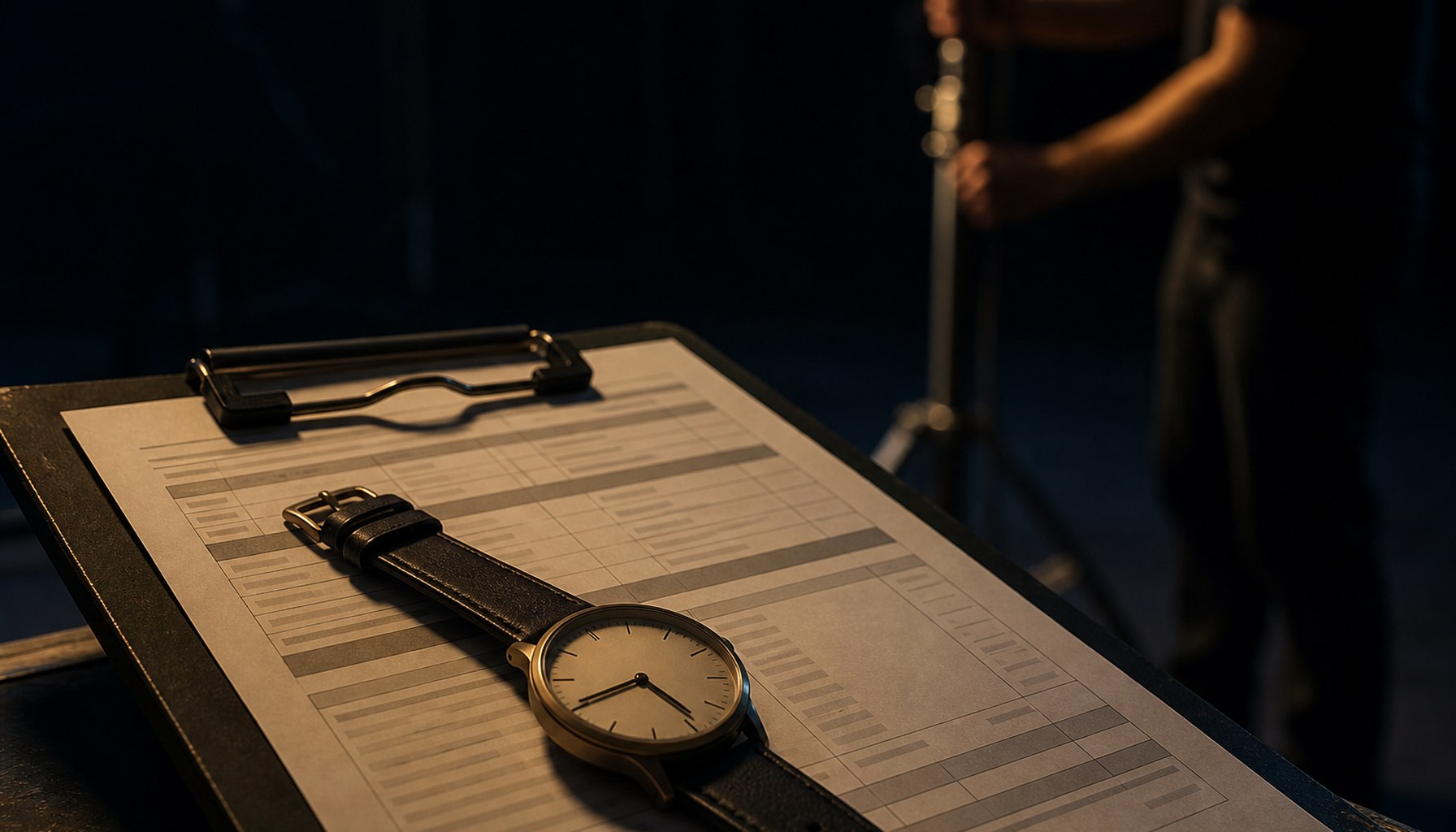
A multi-day shoot has slack built into it. If something goes wrong on day one, day two absorbs it. A one-day shoot has none of that. Every problem that shows up has to get solved inside the same eight or ten hours you were already planning to use for the actual work. That's what makes one-day shoots harder than their budgets suggest, not the amount of work, the total absence of a second chance.
The Schedule Breaks Before Lunch, Not After
Most people expect a shoot day to slip gradually, a few minutes lost here and there until the end of the day feels rushed. In practice, the real damage almost always happens in the first two hours. A late crew call, a location that isn't unlocked when promised, a setup that takes longer than the shot list assumed, and you're already thirty minutes behind before the first take. That thirty minutes doesn't stay thirty minutes. Everything downstream inherits the delay, and by the last setup of the day you're cutting shots to make the wrap time.
The Shot List Is Usually the Optimistic Document in the Room
Shot lists get built during pre-production, when everyone is imagining the shoot going well. That's not a criticism, it's just the nature of planning something that hasn't happened yet. The problem is that a shot list rarely has real buffer in it, because buffer looks like waste on paper. On a one-day shoot, I build the list assuming the first hour will run slower than planned, and I know in advance which shots are the ones I'd cut if the day runs long. Having that list decided before the day starts means it's a planning decision, not a panicked one made at 4pm.
Weather Is the Obvious Risk. Access Is the One That Actually Bites
Everyone plans for weather on an exterior shoot. Fewer people plan hard enough for access: a building manager who didn't get the memo, a permit that's technically valid but nobody on site knows it, a neighbor who didn't expect a crew outside their window at 8am. None of these are dramatic. All of them cost the same thing weather does, time you don't have a second day to make up.
The Fix Isn't More Planning. It's Planning for the Right Two Hours
You can't plan away every risk on a one-day shoot, and trying to usually just produces a longer document nobody reads on the day. What actually helps is being specific about the first two hours: confirmed access, confirmed crew call times with a buffer built in, and a clear answer for what gets cut first if the morning runs long. Get those two hours right and the rest of the day has a real chance of holding. Lose them, and no amount of planning in the rest of the document saves you.
Subscribe if you like content like this delivered weekly to your inbox, subscribe here.